The Bloat Triage: Sorting Normal Digestion From Patterns Worth Chasing
Bloating gets marketed as a problem requiring products — while most of it is normal digestion, some of it is findable patterns and a little of it deserves a doctor. The triage guide: what’s normal, the trigger audit and the two-week diary that beats every elimination guess. (Persistent or painful: doctor first.)

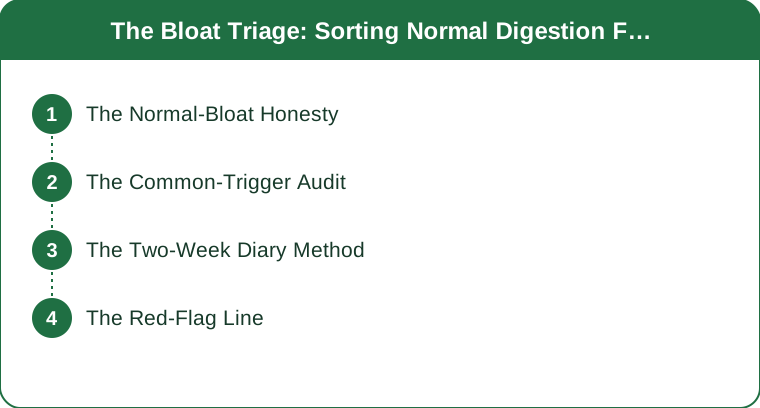
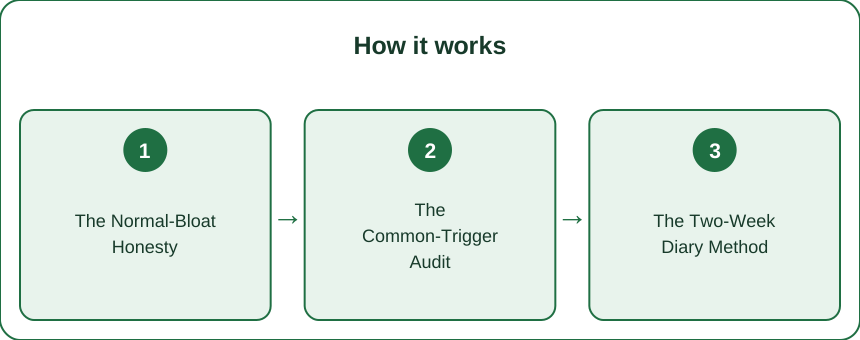
The Normal-Bloat Honesty
Recalibrating expectations: the digestion reality (some abdominal expansion after meals is HOW EATING WORKS — the food, fluid and normal gas of digestion; the flat-all-day stomach of marketing is a fasted, posed moment, not a health state), the daily rhythm (mild evening fullness after a day of eating is physiology — the morning-flat-evening-fuller cycle is normal tide, not failure), the fiber-transition context (the bean-and-vegetable adaptation weeks from the fiber chapters — the temporary gas of a microbiome learning new groceries; the good-sign bloat that fades with consistency), and the culture note (the bloat-panic economy sells products for a state that’s often just… having eaten; the triage starts by retiring the impossible standard).
The Common-Trigger Audit
The usual suspects worth checking: the speed-and-air tier (fast eating, straws, carbonation and gum — the swallowed-air bloat that slower meals fix free; the most common and least glamorous cause), the salt-and-fluid layer (the salty-meal water retention that reads as bloat — the restaurant-dinner puffiness that resolves by morning), the known fermenters (beans, cruciferous vegetables, onions — normal-and-manageable via the ramp rules; the dose-and-adaptation levers before any elimination), the sweetener flag (sugar alcohols — the sugar-free gum and protein-bar polyols that ferment enthusiastically; the label check that solves a surprising share of mystery bloat, per the protein-bar chapter’s warning), and the stress-gut axis (the anxious-day bloat is real physiology — the gut-brain connection working both directions; the breathwork chapter is digestive care too).

The Two-Week Diary Method
Finding YOUR pattern: the log structure (meals, timing, stress level and symptoms with times — the ninety-second entries; the energy-audit method aimed at the gut), the pattern reads (the same-food-different-days comparison that separates food triggers from stress triggers — the lunch that bloats on deadline days and not weekends was never the lunch), the one-change testing (the single-variable experiments the diary suggests — the two-week straw-and-gum pause, the sweetener swap; elimination one suspect at a time, per the sensitive-skin doctrine), and the professional handoff (the diary as appointment evidence — the persistent patterns brought to a doctor with data; the two-week log converts ‘I bloat sometimes’ into an answerable chart).
The Red-Flag Line
When triage escalates: the see-someone list (bloating that’s persistent-and-progressive, paired with pain, weight change, blood or bathroom-habit changes, or new-and-different after 50 — the symptoms that skip the diary and book the appointment; ovarian and GI conditions announce quietly, and the persistent-bloat check is a real medical evaluation), the celiac-and-intolerance tier (the patterns that survive the audit deserve testing before restriction — the test-then-eliminate order that prevents years of unnecessary avoidance), and the reassurance close (most bloat triages into normal-digestion or findable-habit — the products were optional, the patterns were readable, and the diary did what the detox couldn’t). Normal named, patterns found, flags respected.
Most bloat is digestion, slow the eating first, diary for two weeks, escalate the persistent. Bloat triage is sorting — normal, pattern or doctor — and the notebook beats every product.
Keep Reading
This article is for general informational purposes only and is not medical advice. Always consult a qualified health professional for guidance specific to you.