Your First Fermented Foods: A Gentle Onboarding for Suspicious Palates
Quick Answer: Start with yogurt, kefir smoothies, and miso soup — the three easiest entries, none of which taste “fermented.” Begin with tablespoons rather than bowls, because new fermented volume can cause temporary bloating, and build to one serving daily over a few weeks. Only refrigerated products contain live cultures; shelf-stable sauerkraut was pasteurized and has none.
The fermented foods aisle divides humanity cleanly. On one side, enthusiasts who put kimchi on everything including eggs. On the other, people who tried kombucha once in 2019 and still have questions about it.
If you’re on team suspicious, this is your gentle onboarding. Small doses, friendly gateways, full disguise options available.
The good news: the gut benefits don’t require you to enjoy the funk. They arrive whether or not your palate noticed anything.

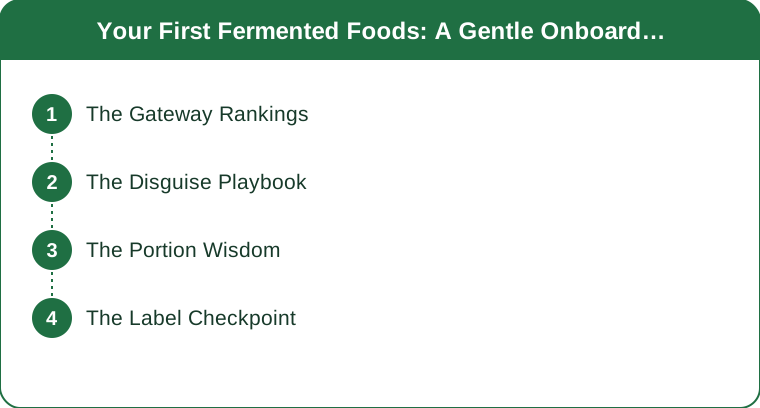
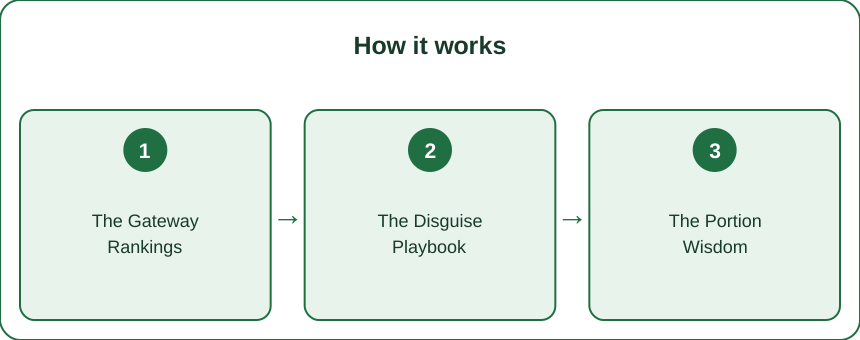
Which Fermented Foods Should Beginners Try First?
Ranked by how much courage they require.
Easiest — you may already be here:
- Yogurt with live cultures. Check the label for “live and active cultures.” Most people are already eating fermented food daily and don’t count it.
- Kefir smoothies. Kefir is tangier than yogurt and contains a wider range of bacterial strains, but the tang disappears entirely behind a banana. This is the highest-value entry point on the whole list.
- Miso soup. Savory, warm, zero funk, and a genuinely comforting thing to eat. Add the miso off the heat — boiling kills the cultures.
Intermediate — some effort required:
- Sauerkraut on sausages or in a sandwich. The classic context exists for a reason.
- Kimchi fried rice. Cooking mellows the bite substantially. This is how most kimchi skeptics get converted.
Advanced — for the eventually converted:
- Straight kombucha, and kimchi eaten as a side dish. If you get here, you’re one of them now.
Climb at whatever pace you like. There’s no requirement to reach the top.
How Do You Hide Fermented Foods in Food You Already Eat?
Fermented foods sneak beautifully, which is the single most useful fact for a suspicious palate.
- Kefir in any smoothie. One cup, plus fruit. Undetectable.
- Sauerkraut buried in a grilled cheese. The cheese and the browning cover it completely, and it adds acidity that actually improves the sandwich.
- Kimchi minced fine into fried rice or scrambled eggs. Chopped small and cooked, it reads as savory seasoning rather than as kimchi.
- Miso whisked into salad dressing. A teaspoon of white miso with olive oil, vinegar, and a little honey makes a dressing better than most bottled ones.
- Yogurt as the base for dips and marinades rather than sour cream or mayo.
The gut benefits arrive regardless of whether the palate noticed. There’s no requirement to develop a taste for anything.

How Much Fermented Food Should You Start With?
Tablespoons, not bowls. This is the advice people skip and then regret.
A sudden large increase in fermented volume can announce itself digestively — gas, bloating, general unhappiness for a few days. It’s temporary, it’s normal, and it’s entirely pace-dependent. Going from zero to a full bowl of kimchi is how people conclude that fermented foods “don’t agree with them” when what actually didn’t agree was the quantity.
The sensible ramp:
- Week 1: one tablespoon a day, or half a cup of yogurt.
- Week 2–3: build toward two tablespoons, or add a second source.
- Week 4 onward: one full serving daily is the entire target.
The microbiome prefers a steady trickle to a heroic flood. Consistency over weeks does considerably more than an ambitious Sunday.
One caveat: if you have a compromised immune system, are pregnant, or have a condition like SIBO or histamine intolerance, check with your doctor before adding fermented foods. They’re beneficial for most people and genuinely not for everyone.
How Do You Know if a Product Has Live Cultures?
Shop the refrigerated section. That’s about 90% of the answer.
Live cultures live in the fridge. Shelf-stable sauerkraut in the condiment aisle was pasteurized to make it shelf-stable, and pasteurization kills the bacteria that were the point. It’s perfectly fine food — it’s just a pickle now, with zero probiotic content.
What to look for on the label: “raw,” “unpasteurized,” “live cultures,” or “naturally fermented.” What to be suspicious of: anything containing vinegar as a primary ingredient, which usually means it was quick-pickled rather than fermented.
The authenticity tell: the jar hisses slightly when you open it. Live fermentation continues producing gas in the fridge, so a genuine raw kraut or kimchi jar releases pressure. A silent jar is a pasteurized one.
Kimchi is the easy case — it’s almost always refrigerated and almost always genuinely fermented. Sauerkraut is where most people accidentally buy the inert version.
Myth vs Fact: Fermented Foods
Myth: All pickled foods are fermented. Fact: Most supermarket pickles are made with vinegar, not fermentation — no live cultures involved. Genuine fermentation is a slower salt-brine process, and the products live in the refrigerated section.
Myth: More fermented food means faster results. Fact: A large sudden increase mostly produces bloating. The research that found microbiome benefits used consistent daily servings over weeks, not heroic single doses.
Myth: Kombucha is the most beneficial fermented food. Fact: It’s the most marketed. Yogurt, kefir, kimchi, and sauerkraut generally deliver more live cultures per serving, and kombucha often carries meaningful added sugar.
Myth: Cooking with kimchi wastes the benefits. Fact: Heat does reduce live culture counts, so kimchi fried rice delivers fewer probiotics than raw kimchi — but the fiber and the fermentation-derived compounds survive, and a cooked serving you’ll actually eat beats a raw one you won’t.
Mini FAQ
Do fermented foods actually improve gut health?
The evidence is reasonably encouraging — a Stanford trial found that a diet high in fermented foods increased microbiome diversity and reduced inflammatory markers over ten weeks. It’s an active research area rather than a settled one, and the effects appear to come from consistent daily intake rather than occasional large amounts.
Are fermented foods better than probiotic supplements?
They’re different. Supplements deliver specific strains in known quantities; fermented foods deliver a wider, less predictable mix along with fiber and nutrients. Food is cheaper, tastes better, and is what most of the diversity research actually studied. For most people, food first is the reasonable default.
How long until you notice a difference?
Digestive changes — the temporary bloating — show up in days. Any actual benefits are measured in weeks, and in the research typically over one to three months of consistent daily intake. It’s a slow, cumulative thing rather than something you’ll feel on Thursday.
TL;DR:
- Start at yogurt, kefir smoothies, and miso soup — the three entries with no funk at all.
- Disguise the intermediates: kefir in smoothies, kraut in grilled cheese, kimchi minced into fried rice.
- Begin with one tablespoon a day and build to one serving over three to four weeks.
- Only refrigerated products have live cultures; shelf-stable kraut is a pasteurized pickle.
- The jar should hiss when you open it. Silent jar, no cultures.
Start at yogurt, disguise the intermediates, portion in tablespoons, shop the fridge section. The suspicious palate converts one fried rice at a time — and the gut was cheering from the first spoonful.
Keep Reading
This article is for general informational purposes only and is not medical advice. Always consult a qualified health professional for guidance specific to you.