The Gut-Skin Connection: Why Your Breakouts Might Start in Your Stomach
Quick Answer: The gut-skin axis is real: gut inflammation and an imbalanced microbiome can trigger systemic inflammation that shows up as breakouts, especially along the jawline and chin. It’s not a replacement for topical skincare, but persistent breakouts that don’t respond to products are worth examining alongside digestion and diet.
You’ve rotated through cleansers, serums, and spot treatments and your jawline still breaks out every month like clockwork. The pattern might not be a skincare problem at all — it might start much lower down.

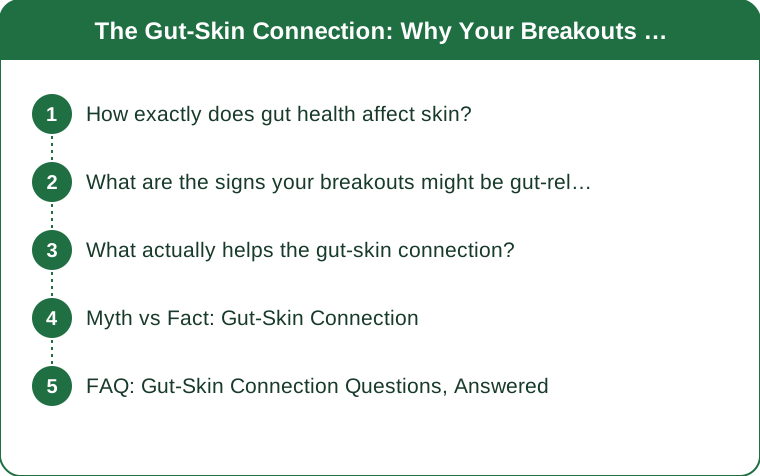
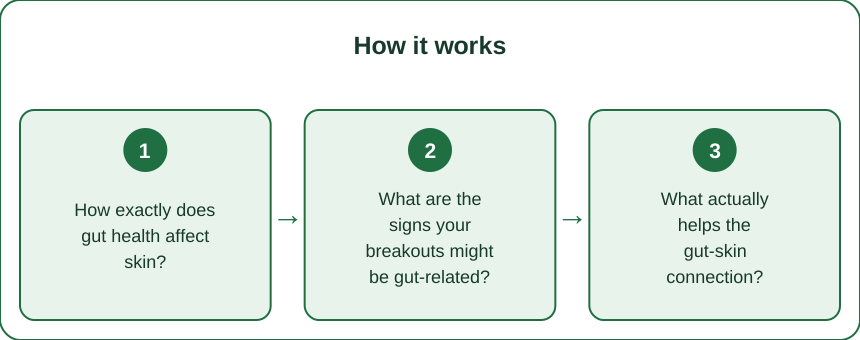
How exactly does gut health affect skin?
When your gut lining is inflamed or your microbiome is imbalanced (from stress, poor sleep, low fiber, or antibiotic use), it can increase intestinal permeability — sometimes called ‘leaky gut’ — letting inflammatory compounds enter your bloodstream more easily.
Your skin, as your body’s largest organ, often reflects that systemic inflammation. This is why breakouts tied to gut issues tend to be inflamed, cystic, and clustered (often jawline and chin) rather than the surface-level whiteheads caused by clogged pores alone.
What are the signs your breakouts might be gut-related?
Look for this pattern together, not any single symptom alone:
- Breakouts that cycle with digestive symptoms (bloating, irregular bowel movements)
- Jawline/chin concentration rather than forehead or nose
- Breakouts that flare after specific foods, especially high-sugar or high-dairy days
- Skin that hasn’t responded to 8-12 weeks of consistent topical treatment
If several of these overlap, it’s worth looking at gut health alongside your skincare routine, not instead of it.

What actually helps the gut-skin connection?
Fiber diversity is the biggest lever — 30+ different plant foods a week (not 30 servings, 30 different types) is linked to a more diverse, resilient gut microbiome in research. Fermented foods (yogurt, kefir, sauerkraut) add beneficial bacteria directly.
Reducing high-glycemic, high-sugar foods matters too — blood sugar spikes are independently linked to increased sebum production and inflammation, separate from any gut mechanism.
Myth vs Fact: Gut-Skin Connection
Myth: Cutting out dairy or gluten will clear your skin for everyone. Fact: These triggers are individual. Some people see real improvement, many see none — an elimination trial (removing one thing for 3-4 weeks, then reintroducing) is more useful than blanket avoidance based on someone else’s experience.
Myth: Probiotics are a guaranteed fix for acne. Fact: Some strains show promise in small studies, but probiotics aren’t a substitute for dermatologist-guided treatment for moderate-to-severe acne — think of it as a possible support, not a cure.
Myth: Gut health explains all adult acne. Fact: Hormones, genetics, and topical factors (pore-clogging products, unwashed pillowcases) remain major contributors. Gut health is one piece, not the whole picture.
FAQ: Gut-Skin Connection Questions, Answered
How long before gut changes show up in skin?
Most people report visible changes at the 6-8 week mark of consistent dietary changes — skin cell turnover and gut microbiome shifts both take weeks, not days.
Should I see a dermatologist or a gastroenterologist first?
Start with a dermatologist for the skin symptom itself; they can rule out other causes and refer you onward if a gut connection seems likely.
Can stress alone cause gut-related breakouts without diet changes?
Yes — stress hormones affect gut permeability and microbiome balance independent of what you eat, which is why breakouts often cluster around high-stress periods regardless of diet.
TL;DR:
- Gut inflammation can trigger systemic inflammation that shows up as jawline/chin breakouts
- Cystic, cyclical breakouts unresponsive to topicals are the pattern worth investigating
- Fiber diversity (30+ plant foods/week) and fermented foods are the biggest actionable levers
- Give diet changes 6-8 weeks before judging results, and don’t skip dermatology in the meantime
This is general information, not medical advice — persistent or severe acne deserves a professional’s eyes, gut angle or not.
Keep Reading
This article is for general informational purposes only and is not medical advice. Always consult a qualified health professional for guidance specific to you.