What Low-FODMAP Actually Means, Explained Without the Confusing Food Lists
The FODMAP acronym scares people off before they understand what it’s actually doing, and the endless food lists don’t help. This is general information, not medical advice, but understanding the underlying mechanism makes the whole approach far less overwhelming than the lists suggest.

What FODMAPs Actually Are
The mechanism: the the-fermentable-carb-definition (FODMAP standing for a group of short-chain carbohydrates that are poorly absorbed in the small intestine and get fermented by gut bacteria further down, producing gas as a byproduct), the the-individual-tolerance-variance (the same FODMAP-containing food causing significant bloating in one person and no reaction at all in another, which is why generic food lists are only a starting point, not a rule), the the-not-inherently-unhealthy-point (FODMAP foods including many objectively healthy items like garlic, onion, and certain fruits, meaning the goal is identifying personal triggers, not avoiding ‘bad’ foods).

How the Elimination Process Works
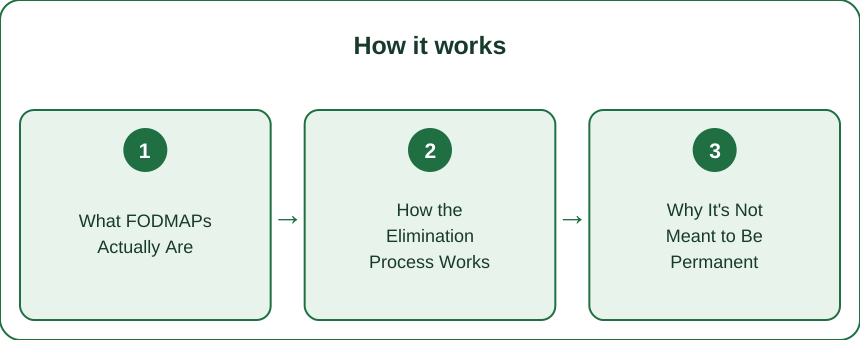
The structured approach: the the-elimination-phase-is-short (the strict elimination phase typically lasting only two to six weeks, not an indefinite restriction, which is a detail many people miss), the the-reintroduction-is-the-actual-point (systematically reintroducing FODMAP groups one at a time afterward being the actual diagnostic step, since elimination alone doesn’t identify which specific foods are triggers), the the-guided-process-recommendation (this process working best with guidance from a healthcare provider or dietitian, since self-directed elimination often misses the structured reintroduction phase entirely).
Why It’s Not Meant to Be Permanent
The long-term view: the the-permanent-restriction-risk (staying in strict elimination long-term risking reduced diet variety and potential nutrient gaps, since many eliminated foods are otherwise nutritionally valuable), the the-goal-is-a-personal-list (the end goal being a short personal list of specific triggers rather than avoiding the entire FODMAP category forever), and the frame (low-FODMAP is a short diagnostic process, not a lifestyle, and skipping reintroduction defeats its purpose)). This is general information, not medical advice.
The FODMAP food lists that circulate online make the whole approach look far more complicated and restrictive than it’s meant to be. FODMAPs are simply a group of carbohydrates that some people’s gut bacteria ferment more aggressively than others, producing bloating and gas — and because tolerance varies so much person to person, the same trigger food can be a non-issue for someone else. The actual process is meant to be short: a strict elimination phase of just a few weeks, followed by a structured reintroduction of each FODMAP group one at a time, which is the step that actually identifies personal triggers rather than guessing from a generic list. Staying in strict elimination indefinitely isn’t the goal and risks losing out on foods that are otherwise nutritionally valuable. What Low-FODMAP Actually Means, Explained Without the Confusing Food Lists, comes down to a short diagnostic process, not a permanent diet. This is general information, not medical advice.
Keep Reading
This article is for general informational purposes only and is not medical advice. Always consult a qualified health professional for guidance specific to you.