Travel Constipation: Why Your Gut Shuts Down on Vacation
Quick Answer: Your gut runs on cues - a stable wake time, the morning coffee, familiar meals, daily movement, and an unhurried private bathroom. Travel deletes all five at once and adds flight dehydration on top, so the system simply pauses. The fix list, in order of power: protect the morning routine (coffee included), rehydrate aggressively on and after the flight, walk after meals, keep fiber continuity with packed backup, and schedule unrushed bathroom time after breakfast. Most cases resolve in one to three days; a week or more, pain, or blood is doctor territory.
It is one of the most common and least discussed travel companions: three days into the trip, someone in the group quietly calculates how long it has been. The good news is that travel constipation is not mysterious - it is a checklist of removed cues, and cues can be packed.

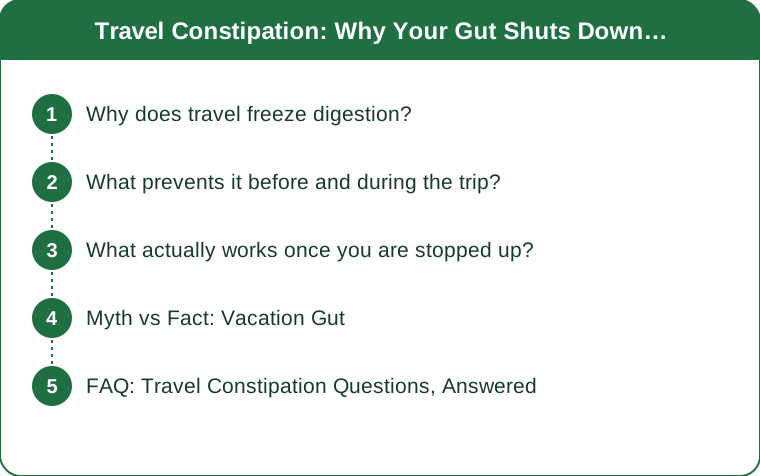
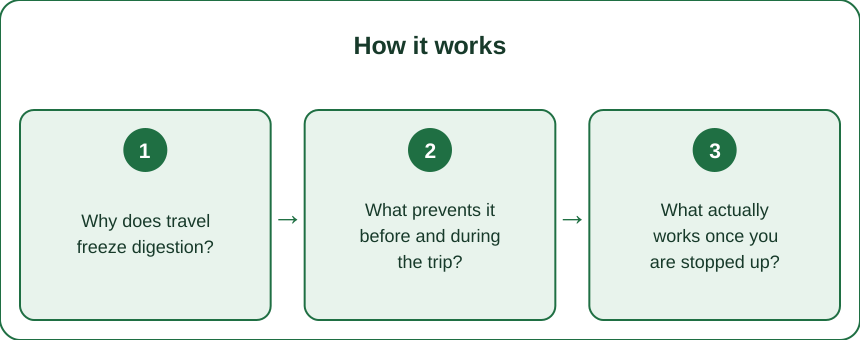
Why does travel freeze digestion?
Because the colon is a creature of habit, and vacation is the systematic removal of its habits.
The gut has a clock, and you just moved it. Colon activity follows a circadian rhythm - it ramps up strongly in the first hour after waking, which is why mornings are prime time. Crossing time zones, or even shifting your wake time by a few hours, puts the gut’s schedule and your bathroom access out of sync. The urge arrives mid-flight or mid-tour instead of at the hotel, gets suppressed, and the system learns to wait.
The gastrocolic reflex loses its triggers. Eating - especially the first warm meal and drink of the day - signals the colon to make room. Skipped breakfasts, delayed coffee, and grab-and-go eating mute the strongest daily go signal the body has.
Flying dehydrates you on purpose. Cabin air runs desert-dry, and mild dehydration is the single most mechanical cause here: the colon’s job is reclaiming water, and when you are short, it reclaims harder, leaving stool dry and slow.
Sitting replaces walking. Planes, trains, tour buses, beach chairs - travel is often dramatically more sedentary than home life, and movement is a major driver of gut motility.
The menu changed all at once. Restaurant food skews low-fiber, high-fat, and generously salted - three shifts the gut notices immediately.
And the privacy factor is real. Shared hotel rooms, hostel bathrooms, and a partner waiting outside create suppression - and a suppressed urge literally recedes as the window passes. Shy bowel is common, physiological, and worth planning around rather than pretending away.
What prevents it before and during the trip?
The strategy is continuity - carry your gut’s routine across the border.
Guard the morning anchor above everything. Whatever your home pattern is - wake, water, coffee, breakfast - reproduce it the first morning and every morning after, even on vacation time. The coffee matters specifically: for most regular drinkers it is a reliable colon stimulant, and skipping it to sleep in removes your strongest trigger on the exact days you need it. Sleep in, fine - but run the anchor sequence when you do get up.
Fly wet. A liter across a domestic flight, more for long-haul, electrolytes for anything over six hours, and go easy on alcohol in the air - it dehydrates precisely when the cabin already is. Land ahead on fluids and half the problem never materializes.
Book movement into day one. The arrival-day walk - twenty minutes around the neighborhood after the first dinner - restarts motility, helps the body clock adjust to the new zone, and beats any supplement you could have packed.
Pack fiber continuity. If home life includes consistent fiber, vacation eating will underdeliver. The travel kit: a few high-fiber bars, single-serve psyllium or ground flax packets for hotel-breakfast yogurt, and a standing order of fruit at every market you pass. Kiwis and prunes are the evidence-backed heavy hitters - two kiwis a day has genuine trial support for keeping things moving.
And schedule the bathroom like an activity. Unrushed time after breakfast, before the day’s plans - deliberately, with the group told you will meet them in the lobby. The urge needs a window; itineraries that sprint from alarm to tour bus close it daily.

What actually works once you are stopped up?
A sequence, from gentlest to pharmacy - most trips never need the end of the list.
Step one: rebuild the morning trigger stack. Warm drink on waking, real breakfast, coffee if you drink it - then fifteen unrushed minutes. The gastrocolic reflex is strongest after that first meal; give it the full runway two mornings in a row before concluding anything.
Step two: walk, generously. Thirty-plus minutes, ideally after meals. Vacation is the easiest place on earth to do this - the walk is the sightseeing.
Step three: fix the mechanics. Feet elevated on anything - a trash can, a stack of towels - approximates the squat angle that makes things anatomically easier. Unglamorous, effective, free.
Step four: load the food levers. Kiwis, prunes or prune juice, a big salad, oatmeal, plenty of water alongside - fiber without fluid can worsen the jam, so they travel together. Go easy on the cheese-bread-charcuterie triangle for a day.
Step five: the pharmacy tier, calmly. An osmotic laxative (the polyethylene glycol type) is the gentle standard for a multi-day stall - it draws water into the colon and typically works within a day or two without cramping. Magnesium-based options are common alternatives. A pharmacist can point you right in any country; anyone on medications or with kidney issues checks first. Stimulant laxatives are the occasional-rescue tier, not the daily plan.
And do not strain - ever. Straining accomplishes little and courts hemorrhoids, the souvenir nobody wants. If the urge is not there, close the window and try after the next meal.
Red flags that end self-management: severe or worsening pain, blood, vomiting, fever, or nothing moving beyond about a week - that is a medical visit, wherever you are. General information, not medical advice.
Myth vs Fact: Vacation Gut
Myth: It is the foreign food. Fact: It is mostly the missing routine - the shifted clock, the skipped breakfast, the dehydrating flight, the vanished walk, the unfamiliar bathroom. The cuisine gets blamed because it is the visible change, but travelers who keep their morning anchor and hydration usually digest new menus without incident.
Myth: Just eat a ton of fiber and it will sort itself out. Fact: A sudden fiber load on a dehydrated, low-movement system produces bloat and gas without necessarily producing results. Fiber works with water and walking, gradually - the trio is the treatment, not the bran alone.
Myth: Coffee dehydrates, so skip it while traveling. Fact: For habitual drinkers, coffee’s fluid mostly counts toward hydration, and it is one of the most reliable colon stimulants available - skipping it removes your best morning trigger on the worst possible days. Keep the coffee; add water alongside.
Myth: A few days without going means something is wrong. Fact: One to three slow days at the start of a trip is textbook and self-resolving as routine rebuilds. The worry list is different: a week-plus, significant pain, blood, fever, or vomiting - those go to a clinician, not a checklist.
Myth: Probiotics taken the day of travel will fix it. Fact: Whatever their longer-term merits, probiotics are not a same-day motility tool. For this specific problem, water, walking, morning routine, kiwis and prunes, and - if needed - a gentle osmotic laxative are the tools with mechanisms that match the timeline.
FAQ: Travel Constipation Questions, Answered
How long does travel constipation usually last?
One to three days for most people, resolving as the morning routine, hydration, and movement re-establish in the new location. Persisting beyond about a week - or any appearance of significant pain, blood, fever, or vomiting - moves it from travel nuisance to medical question, and local urgent care or a pharmacist consult is the right call.
What should I eat on the first day of a trip?
A real breakfast with fluid and your usual coffee, fruit at every opportunity (kiwis and prunes are the evidence-backed stars), something oat-based or otherwise fiber-forward, and water throughout. Save the cheese-and-bread festival for day two - day one is for reminding your gut that the systems still run.
Does flying really affect digestion that much?
Yes, through two channels: cabin air is extremely dry, and mild dehydration directly slows the colon; and a travel day usually means hours of sitting plus a scrambled meal schedule. A liter of water in the air, an electrolyte packet on long-hauls, aisle walks, and a post-arrival stroll neutralize most of it.
Is it okay to just take a laxative on vacation?
As a bridge, yes - a gentle osmotic type is the standard choice and typically works within a day or two without drama. Pair it with the actual fixes (morning anchor, water, walking, fruit) so the system restarts on its own, and treat stimulant laxatives as occasional rescue rather than a daily habit. Medication interactions and ongoing conditions warrant a quick pharmacist check first.
TL;DR:
- The gut runs on cues - wake time, coffee, meals, movement, privacy - and travel removes all five at once.
- Fly wet, keep the morning anchor (coffee included), and walk after meals from day one.
- Pack continuity: fiber bars, psyllium packets, and a kiwi-and-prune habit at every market.
- Feet up on a trash can, unrushed post-breakfast window, never strain.
- Gentle osmotic laxatives bridge multi-day stalls; a week-plus, pain, or blood means a clinician.
The vacation gut freeze was never about the destination. It is your routine failing to make the flight - and the routine packs smaller than your toiletry bag.
Keep Reading
This article is for general informational purposes only and is not medical advice. Always consult a qualified health professional for guidance specific to you.