Why Your Appetite Changes in the First Cool Week
Quick Answer: Appetite rises as the weather cools for three reasons: thermoregulation costs energy, so your body signals for more fuel; shorter days shift serotonin and melatonin, which affects carbohydrate craving specifically; and routine changes move meal timing, which moves hunger timing. Total daily intake often rises modestly in autumn and it is a normal, well-documented seasonal pattern rather than a discipline problem.
The timing is remarkably consistent. One genuinely cool week in late August and the appeal of a cold salad for dinner disappears entirely.

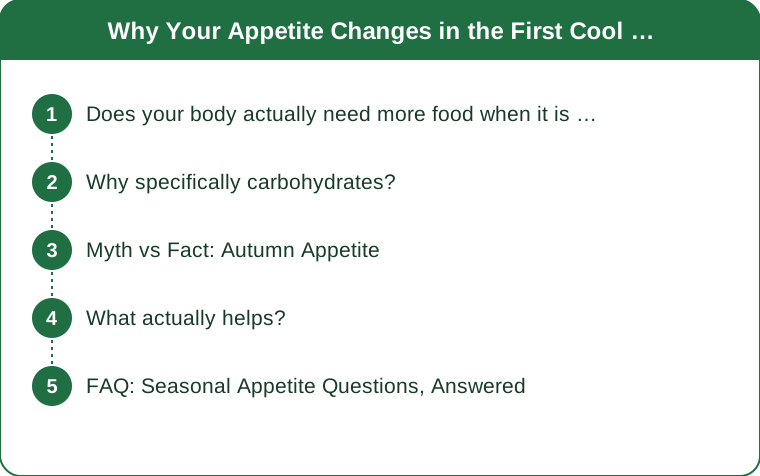
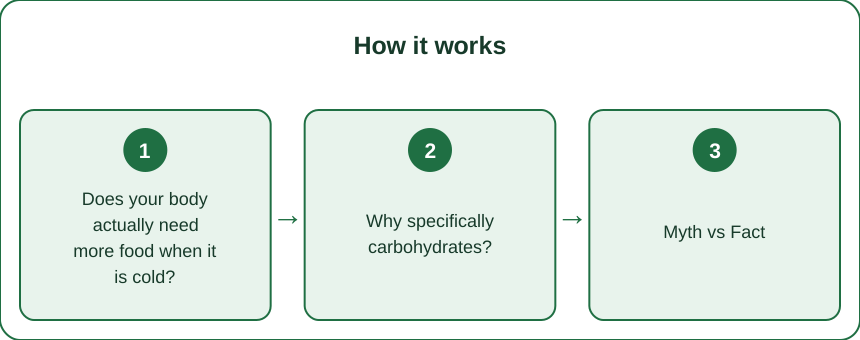
Does your body actually need more food when it is cold?
A little, and less than the size of the appetite change would suggest.
Thermoregulation has a real energy cost. Maintaining core temperature in cooler conditions increases energy expenditure modestly. The effect is genuine but small in a heated house with adequate clothing - it is much larger for people working outdoors.
Brown adipose tissue activates in the cold. Cold exposure activates this tissue, which generates heat by burning energy. It is one plausible route by which cooling weather nudges appetite upward.
Digestion itself produces heat. The thermic effect of food means eating generates warmth, which may partly explain why warm, substantial meals feel more satisfying in cool weather beyond just their temperature.
But the appetite increase usually exceeds the need. In modern heated environments, the physiological requirement rises far less than hunger does. The signal is somewhat vestigial - a system calibrated for a world without central heating.
Which is worth knowing without being anxious about it. A modest increase in autumn intake is normal and self-limiting for most people. The pattern only becomes a problem when it compounds with reduced activity.
Why specifically carbohydrates?
Because of a light-and-serotonin pathway that is fairly well described.
Reduced daylight lowers serotonin activity. Serotonin synthesis and turnover are influenced by light exposure, and the reduction in daylight through autumn affects it measurably in many people.
Carbohydrate intake supports serotonin production. Eating carbohydrate raises insulin, which alters the ratio of amino acids reaching the brain in a way that favors tryptophan uptake - and tryptophan is the precursor to serotonin. This is a plausible physiological basis for the craving, not just a psychological association.
Melatonin timing shifts too. Longer nights shift melatonin production earlier, which affects sleep timing, and disrupted sleep independently increases appetite and specifically increases carbohydrate preference.
Comfort food associations are real but secondary. Learned associations between warm starchy food and comfort do exist and do contribute. They sit on top of a physiological signal rather than explaining it entirely.
For a minority, this becomes clinically significant. Seasonal affective disorder frequently includes increased appetite and carbohydrate craving as core features. If low mood, oversleeping, and appetite changes arrive together each autumn, that is worth discussing with a doctor rather than managing alone.

Myth vs Fact: Autumn Appetite
Myth: Autumn weight gain is inevitable. Fact: Intake tends to rise modestly and activity tends to fall, and it is the combination that matters. Maintaining activity through the darker months addresses most of it, and the intake change alone is usually small.
Myth: Craving carbs means you lack willpower. Fact: There is a describable physiological pathway involving daylight, serotonin, and sleep timing. Treating a hormonal signal as a character flaw is both inaccurate and unhelpful.
Myth: You should resist the craving entirely. Fact: Restriction generally intensifies craving. Choosing carbohydrate sources with fiber and protein alongside them - which slow the response and improve satiety - works far better than avoidance.
Myth: Warm food is more filling than cold food. Fact: There is some evidence that warm meals increase satisfaction, though the effect is modest. What matters more is that warm autumn meals tend to contain more protein and fiber than summer salads, which genuinely are more filling.
Myth: Your metabolism slows down in winter. Fact: Resting metabolic rate does not meaningfully drop with the season. What drops is activity - fewer walks, fewer outdoor hours, more sitting - and that is the variable worth watching.
What actually helps?
Five things, and the first two are not about food.
Get morning daylight. Ten to twenty minutes outdoors early in the day supports circadian rhythm and serotonin, and it is the intervention that addresses the cause rather than the symptom. This matters more than any dietary adjustment.
Protect your activity level deliberately. The autumn intake rise is largely harmless; the autumn activity drop is what changes the balance. Book the walk, keep the class, move it indoors if you must - but do not let it quietly disappear with the daylight.
Eat the carbohydrates with protein and fiber. Oats with nuts, bread with eggs, pasta with beans and vegetables. This satisfies the craving while blunting the glucose response and improving satiety substantially.
Prioritize sleep as nights lengthen. Short sleep independently increases hunger and carbohydrate preference. Autumn is when consistent sleep timing gets easier and most people accidentally make it worse by staying up in the dark.
Use warmth as a tool. Warm drinks, soups, and hot meals genuinely satisfy the season’s appetite in a way that cold food does not. Working with the preference is more effective than fighting it - a substantial vegetable soup satisfies the same signal as a pastry does.
And stop weighing the change as a failure. Modest seasonal fluctuation is normal in most people and typically reverses in spring without intervention.
FAQ: Seasonal Appetite Questions, Answered
Is it normal to eat more in autumn?
Yes. Seasonal variation in food intake is well documented, with intake typically rising modestly from late summer through autumn. It is a common pattern, not a personal failing.
Why do I want bread and pasta specifically?
The daylight-serotonin pathway favors carbohydrate specifically, and disrupted sleep timing reinforces it. Learned comfort associations add to it. All three point the same direction.
Will the appetite go back down?
For most people it moderates in spring as daylight increases. If it does not, or if it comes with persistent low mood and oversleeping, that is worth a medical conversation.
Does vitamin D help?
Vitamin D status commonly falls through autumn and winter at higher latitudes, and supplementation is widely recommended in those regions. Whether it affects appetite specifically is not established - it is worth doing for other reasons.
This is general information, not medical or dietetic advice.
TL;DR:
- Cooler weather raises appetite through thermoregulation, the daylight-serotonin pathway, and shifted routine.
- Carbohydrate craving specifically has a describable physiological basis - it is not a willpower problem.
- Morning daylight and protected activity address the cause; dietary tweaks only address the symptom.
- Eat the carbohydrate with protein and fiber, prioritize sleep as nights lengthen, and use warm meals deliberately.
The most useful shift is treating this as a scheduling problem rather than a discipline one. The appetite change is small and largely self-correcting; what actually determines how autumn goes is whether the daily walk survives the clocks changing. Book that now, while it is still pleasant outside, and the rest of it mostly takes care of itself.
Keep Reading
This article is for general informational purposes only and is not medical advice. Always consult a qualified health professional for guidance specific to you.