Why Your Digestion Changes When Your Routine Shifts in Autumn
Quick Answer: The digestive system runs on a circadian rhythm and responds strongly to routine - meal timing, sleep timing, and activity all shift in early autumn, and the gut takes a few weeks to resettle. Add seasonal changes in what people eat, less walking as evenings darken, and reduced fluid intake in cool weather, and you have four causes acting at once. Most autumn digestive complaints resolve by re-anchoring meal and sleep times rather than by removing foods.
September arrives, the schedule changes, and by the second week something feels off - bloated in the afternoon, irregular in the morning, hungry at odd times. The instinct is to suspect a food. The more likely culprit is the calendar.

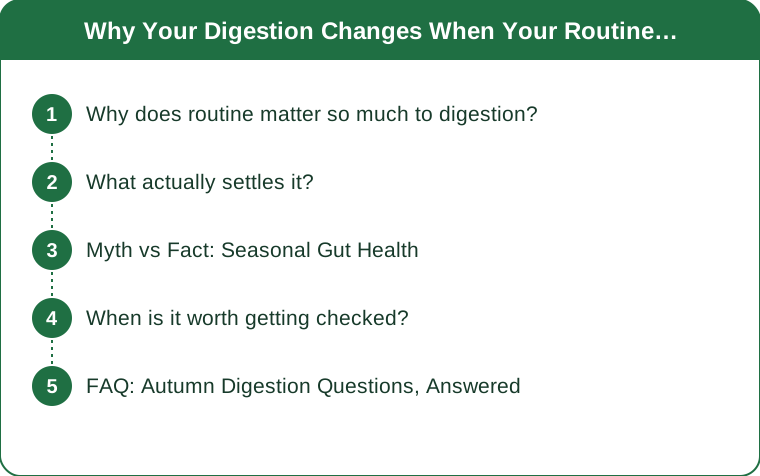
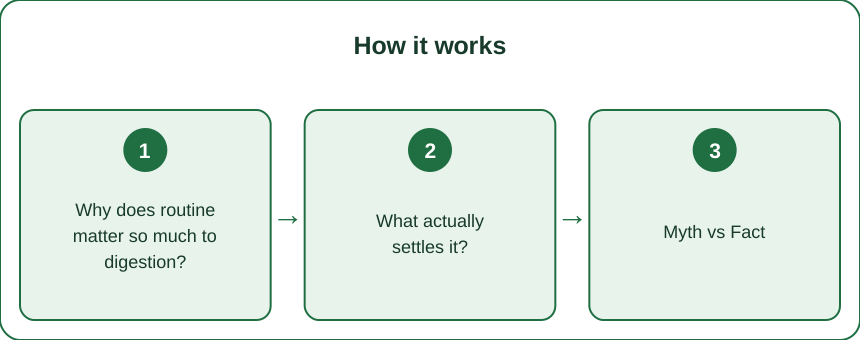
Why does routine matter so much to digestion?
Because the gut runs on its own clock, and that clock takes its cues from your behaviour.
The digestive system has a circadian rhythm. Gut motility, enzyme secretion, and even the composition and activity of the gut microbiome vary across the 24-hour cycle rather than being constant. This is why the same meal at 8am and at 11pm is not processed identically.
Meal timing is one of the strongest cues that sets that rhythm. Regular eating times entrain the digestive clock, and irregular ones weaken the signal. A summer of loose meal timing followed by an abrupt return to a fixed schedule - or the reverse - is a real disruption.
The gut-brain connection means stress goes straight to digestion. The nervous system communicates bidirectionally with the digestive tract, and stress affects motility, sensitivity, and symptom perception. Early autumn is a high-demand period for many people, and the gut registers it.
Sleep timing shifts with daylight, and disrupted sleep is associated with digestive symptoms in its own right. In regions with a clock change, that disruption is abrupt rather than gradual.
Physical activity falls as evenings darken, and movement supports gut motility directly. The daily walk that quietly kept things regular in July is frequently the first casualty of dark evenings.
And what people eat genuinely changes. Autumn eating shifts toward warmer, heavier, more cooked food, often with different fibre profiles - fewer raw salads and summer fruits, more starches, roasted vegetables, and baked goods. That change matters, but it usually matters less than the timing changes above.
What actually settles it?
Anchors, applied consistently for a couple of weeks before judging.
Fix the times before fixing the food. Eat meals at roughly consistent times, particularly breakfast, which is a strong circadian anchor. Consistency does more than composition for most timing-related symptoms.
Protect sleep timing as the light changes. A consistent wake time is the most useful single anchor, and morning light exposure within an hour of waking reinforces it.
Reinstate daily movement deliberately. The walk that happened naturally in summer needs to be scheduled in autumn. Even ten to fifteen minutes after a meal supports motility and is one of the most reliably useful habits for digestion.
Drink more than thirst suggests. Thirst cues drop in cool weather, and reduced fluid intake is a very common contributor to autumn constipation. Warm drinks count.
Increase fibre gradually rather than suddenly. Autumn brings squash, root vegetables, pulses, and more cooked greens, and a sharp increase in fibre intake causes bloating even though the direction is right. Increase over two to three weeks and drink more water alongside it.
Do not start eliminating foods early. Removing food groups in response to a few weeks of symptoms tends to produce unnecessary restriction and rarely identifies a real trigger, because the actual variable was routine. Give the anchors two to three weeks first.
And watch the caffeine change. Coffee intake often rises with darker mornings and colder weather, and caffeine affects gut motility directly. A significant increase can explain a change on its own.

Myth vs Fact: Seasonal Gut Health
Myth: New symptoms mean a new food intolerance. Fact: Genuine intolerances usually produce consistent, reproducible reactions to a specific food. Symptoms that appear alongside a schedule change, vary from day to day, and affect everything you eat are far more likely to reflect timing, stress, and motility than a new intolerance.
Myth: Bloating means you are eating too much fibre. Fact: Sudden increases in fibre cause bloating; adequate fibre intake generally supports gut health. The problem is usually the rate of change rather than the amount. Increase gradually and give the microbiome two or three weeks to adjust.
Myth: Cold food and drinks upset the stomach in cold weather. Fact: There is little evidence that the temperature of food meaningfully affects digestion in healthy people - the stomach equalises temperature quickly. Warm food in cold weather is comforting and often more appealing, which is a good enough reason, but it is not a physiological requirement.
Myth: A probiotic supplement will fix it. Fact: Specific probiotic strains have evidence for specific conditions, but they are not a general repair for symptoms caused by irregular eating, poor sleep, and reduced movement. Fixing the routine addresses the actual cause; a supplement addresses a different one.
Myth: You should feel it settle within a few days. Fact: The gut microbiome and the digestive rhythm respond over weeks, not days. Judging a routine change after four days is the most common reason people conclude it did not work and move on to something else.
When is it worth getting checked?
Most seasonal digestive change is unremarkable and self-limiting, but some things should not be waited out.
Worth a GP appointment: persistent changes in bowel habit lasting more than a few weeks, blood in stool, unexplained weight loss, persistent abdominal pain, difficulty swallowing, or symptoms that wake you at night. These are not seasonal patterns and should be assessed rather than managed at home.
Also worth raising: symptoms that started abruptly rather than gradually, symptoms accompanied by fever, and any significant change in an existing diagnosed condition.
What is generally unremarkable: mild bloating that varies with what and when you eat, some irregularity during a schedule change, and appetite shifting with the season. These typically settle within a few weeks of consistent routine.
Keeping a simple record helps if you do see someone. Two weeks of noting what you ate, when, and what you experienced gives far more useful information than a general description, and it often reveals a pattern - usually a timing one - before the appointment happens.
A note on the autumn illness season. Digestive symptoms following a viral infection are common and can persist for a few weeks afterwards. That is a recognised pattern rather than a new problem, though persistent symptoms after an infection are still worth mentioning.
And on stress specifically: if the digestive symptoms track with a stressful period, that is a genuine physiological relationship rather than something imagined. The gut-brain axis is well established, and addressing the stress is treating the cause rather than avoiding the issue.
This is general information and not medical advice. Persistent or concerning symptoms should be assessed by a healthcare professional.
FAQ: Autumn Digestion Questions, Answered
Why does my digestion get worse in autumn?
Usually because several routine variables change at once - meal timing, sleep timing, activity levels, and fluid intake all shift as the season and schedule change. The digestive system runs on a circadian rhythm entrained largely by those behaviours, so it takes a few weeks to resettle after they move.
Should I cut out foods if I am bloated in autumn?
Not as a first step. Give consistent meal times, adequate fluid, and daily movement two to three weeks first. Symptoms that arrive alongside a schedule change and vary day to day are much more likely to be timing-related than caused by a specific food, and premature elimination tends to produce unnecessary restriction.
Why am I constipated now that it is colder?
Most commonly reduced fluid intake, because thirst cues drop in cool weather, combined with less daily walking as evenings get dark. Both directly affect motility. Deliberately drinking more, including warm drinks, and scheduling a daily walk usually resolves it.
How long does it take the gut to adjust to a routine change?
Generally two to three weeks. The microbiome and the digestive rhythm both respond over that kind of timescale rather than in days, which is why people who judge a change after a few days often conclude wrongly that it has not helped.
When should I see a doctor about digestive symptoms?
For persistent changes in bowel habit lasting more than a few weeks, blood in stool, unexplained weight loss, persistent pain, difficulty swallowing, or symptoms that wake you at night. Those are not seasonal patterns and warrant assessment rather than home management.
TL;DR:
- The gut runs on a circadian rhythm entrained by meal times, sleep, and movement - all of which shift in autumn.
- Fix the timing before touching the food; anchors beat elimination for schedule-driven symptoms.
- Cool weather reduces thirst cues, and reduced fluid plus less walking is the classic autumn constipation recipe.
- Increase autumn fibre gradually over two to three weeks, not all at once.
- Give any change two to three weeks before judging it - the gut does not respond in days.
It is rarely a new intolerance in the second week of September. It is usually the calendar, and the calendar is easier to fix.
Keep Reading
This article is for general informational purposes only and is not medical advice. Always consult a qualified health professional for guidance specific to you.