How Long Your Gut Actually Takes to Recover After a Round of Antibiotics
Quick Answer: Weeks to months, not days. Antibiotics don’t distinguish between harmful and beneficial bacteria, so a course substantially reduces populations you actually wanted. Longitudinal studies find measurable compositional changes still present weeks to months after a completed course, with some specific species not returning to baseline at all. Support the window with a wide variety of plant fibers, regular fermented foods, and realistic patience — and call your provider for anything severe. This is general information, not medical advice.
Ten days of pills, three days of feeling rough afterward, and then you’re fine. Case closed.
Except the thing the antibiotic did to the several trillion bacteria living in your intestines is not remotely finished being undone.

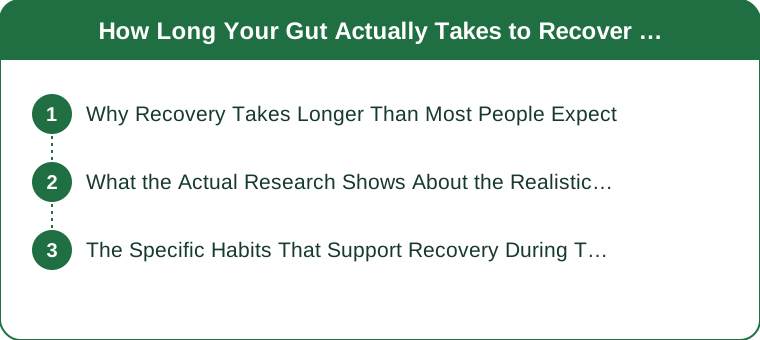
Why Does Recovery Take Longer Than People Expect?
Antibiotics aren’t selective. This is the core mechanism, and it’s by design. A broad-spectrum antibiotic isn’t targeting a specific species — it’s suppressing bacterial growth across the board. It clears the infection, and it substantially reduces populations of beneficial gut bacteria in exactly the same pass. The disruption extends well past the problem it was prescribed for.
Diversity recovers slower than raw numbers. Bacterial count can rebound reasonably quickly — the fast-growing survivors expand into the space that opened up. Bacterial diversity — how many different species, in what balance — is a separate measure and a slower one. Longitudinal research consistently shows diversity lagging behind population count. Which means the moment you feel digestively normal is not a reliable signal that the community has actually reassembled.
That gap between “feels fine” and “is restored” is the whole reason people underestimate this.

What Does the Research Actually Show?
Compositional changes persist for weeks to months. Studies that track gut bacterial composition after a completed course repeatedly find measurable differences from baseline still present well after the course ends — commonly in the weeks-to-months range. The exact timeline varies with the specific antibiotic used, the length of the course, and individual factors. Broad-spectrum drugs and longer courses generally mean longer recovery.
Some species may not fully return. This is the important nuance that gets flattened out of most summaries. Certain bacterial populations have been found not returning to complete pre-antibiotic levels even well after typical recovery windows. Recovery is substantial and it isn’t guaranteed to be total.
There’s no single universal number. Anyone giving you an exact figure — “six weeks” — is being more precise than the evidence supports. The honest version is a range that varies considerably by person and by drug.
None of this argues against taking antibiotics you need. It argues for knowing what window you’re in afterward.
Myth vs Fact
Myth: Normal digestion means the microbiome is back to normal. Fact: Function returns before diversity does. Feeling fine is genuinely good news and it isn’t the same measurement.
Myth: One good probiotic rebuilds everything. Fact: Specific well-studied strains have targeted evidence for reducing antibiotic-associated digestive symptoms — a real but narrow claim. That’s different from restoring overall bacterial diversity, which no supplement has established evidence for doing. Worth taking for what it’s shown to do, not for what the label implies.
Myth: The damage is permanent so there’s no point trying. Fact: Substantial recovery does happen, and diet during the window genuinely supports it. The correct response to “slower than you thought” is patience, not resignation.
What Habits Actually Support Recovery?
Eat a genuinely varied range of plant fibers. Variety is the mechanism, not volume — different fiber types feed different bacterial species, so diversity of intake supports diversity of bacteria. Beans, lentils, oats, whole grains, a wide mix of vegetables, whole fruit, nuts, seeds. A useful target is around 25–30 different plant foods across a week, which is easier than it sounds once you count herbs, spices, and the varieties within a category.
Include fermented foods regularly. Yogurt with live cultures, kefir, sauerkraut, kimchi, miso. A small serving most days across the whole window rather than a concentrated week-long push.
Be patient with mild lingering symptoms. Some looseness, bloating, or general unsettledness for a couple of weeks after a course fits the timeline. That’s worth waiting out rather than treating as a new problem.
But know where the line is. Patience applies to mild and improving. Contact your provider for diarrhea that’s severe, bloody, or lasts more than a few days after finishing a course — post-antibiotic C. difficile infection is a real risk and needs prompt treatment. Also check in for fever, significant abdominal pain, unexplained weight loss, or digestive symptoms that persist for weeks without improving. Don’t file those under “expected.” This is general information, not medical advice.
Mini FAQ
Should I take a probiotic during the course or after?
Discuss it with your provider, since the evidence is strain-specific and the answer depends on why you’re taking it. If it’s for symptom management during the course, that’s the better-evidenced use. Spacing it a couple of hours from the antibiotic dose is standard advice and low-risk.
Does diet during the course matter, or just after?
Both. Starting the varied-fiber approach during the course rather than waiting until it’s over gives the surviving populations more to work with.
Is there a way to test whether I’ve recovered?
Consumer microbiome tests exist, but interpretation isn’t well established and the results generally wouldn’t change the recommendation — which is varied fiber, fermented foods, and time either way.
TL;DR:
- Antibiotics reduce beneficial bacteria alongside harmful ones; that’s the mechanism, not a side effect.
- Diversity recovers much slower than bacterial count — feeling fine isn’t the same as being restored.
- Research finds compositional changes persisting weeks to months; some species may not fully return.
- Support it with ~25–30 different plant foods a week plus regular fermented foods.
- Call your provider for severe or bloody diarrhea, fever, or symptoms persisting for weeks.
Keep Reading
This article is for general informational purposes only and is not medical advice. Always consult a qualified health professional for guidance specific to you.